
POWERED BY RISKAWARE
Octa
UAS Target tracking and behavioral analysis
COUNTER-UAS · PRODUCT
Octa
UAS Target Tracking and Behavioral Analysis
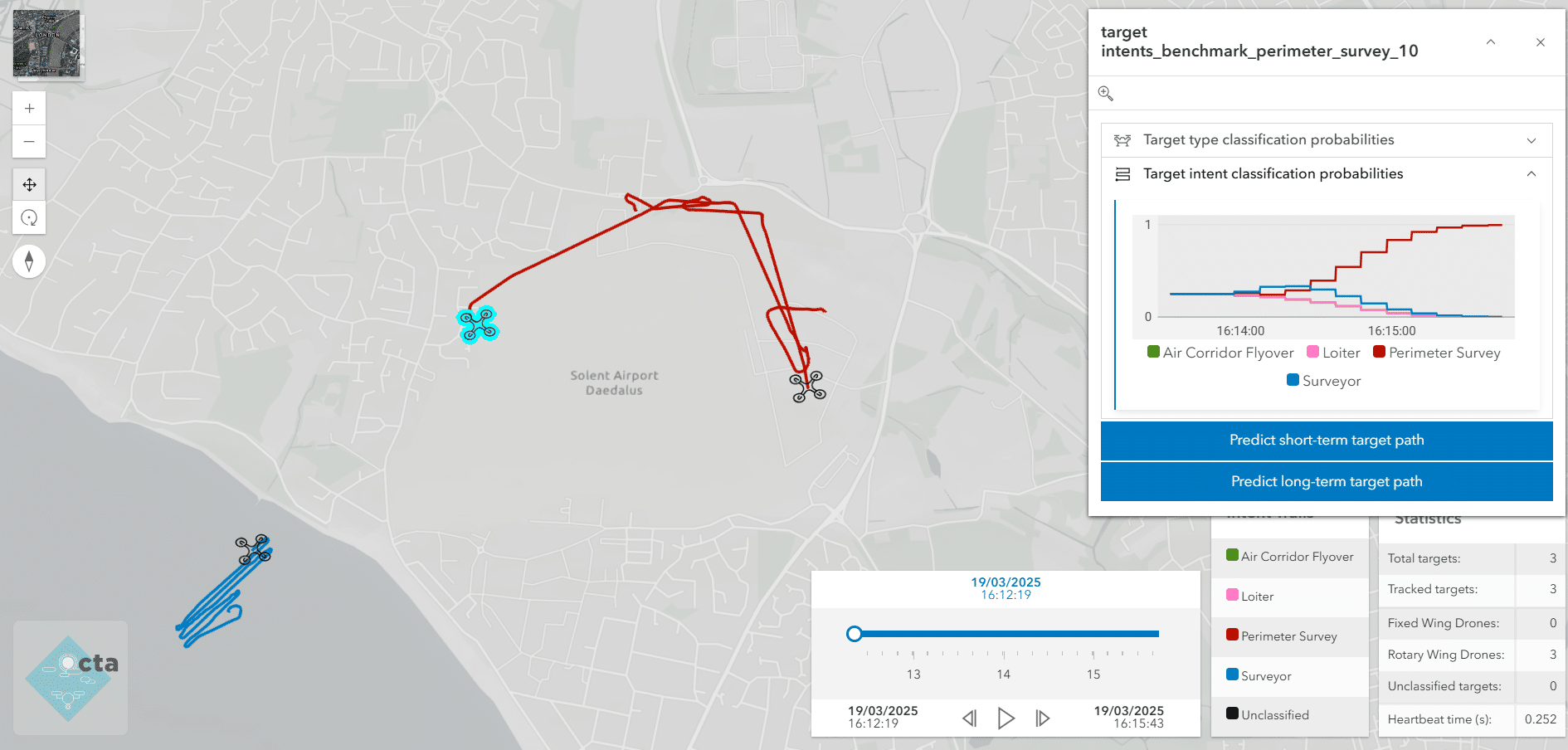
A single unauthorised drone can close an airport, halt an operation or put a protected site at risk, and most systems only identify it once it is already close, when the time to respond has gone. Octa works from the sensor tracks you already have to identify what is in the airspace, analyse how it is behaving and predict where it is heading, so operators are alerted only when action is required. Because it classifies from track dynamics, it can do this out to a sensor's full detection range, well beyond what methods such as micro-Doppler can achieve.
Key Capabilities
Object classification
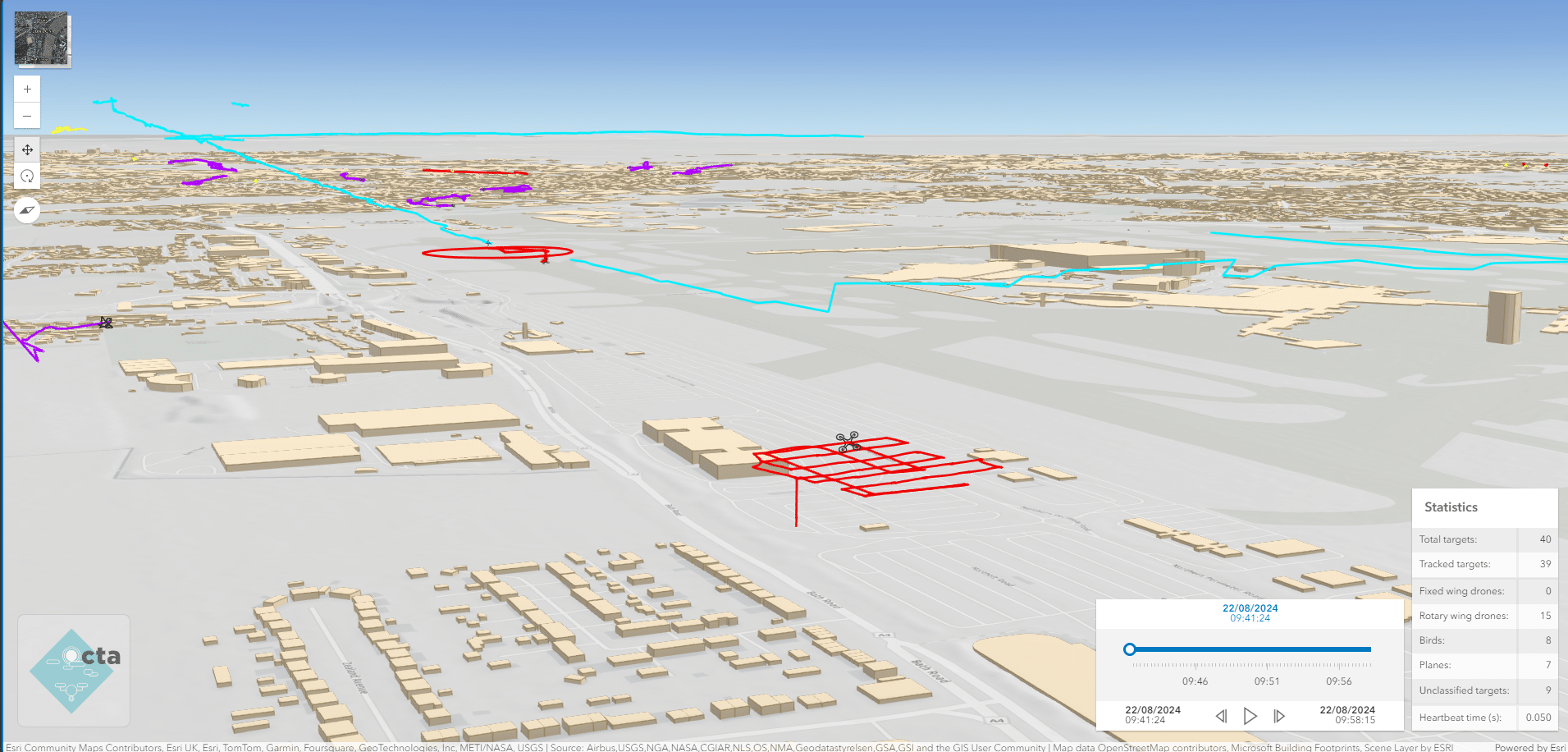
Classify, track and analyse airborne objects to support effective detection and monitoring of authorised and unauthorised UAS across complex airspace.
Future path prediction
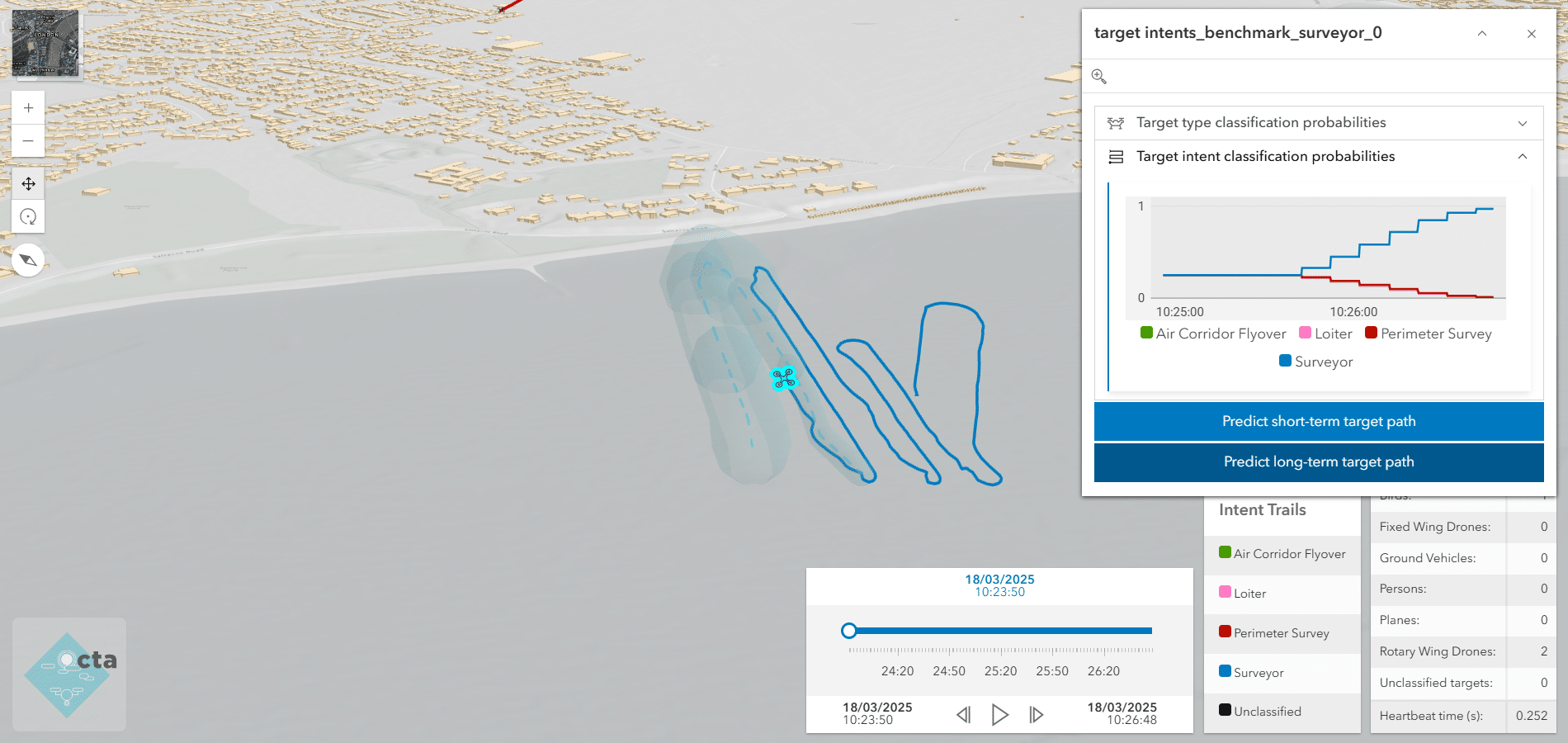
Projects where a track is heading, so operators see intent developing rather than reacting after the fact.
Anomaly & intent analysis
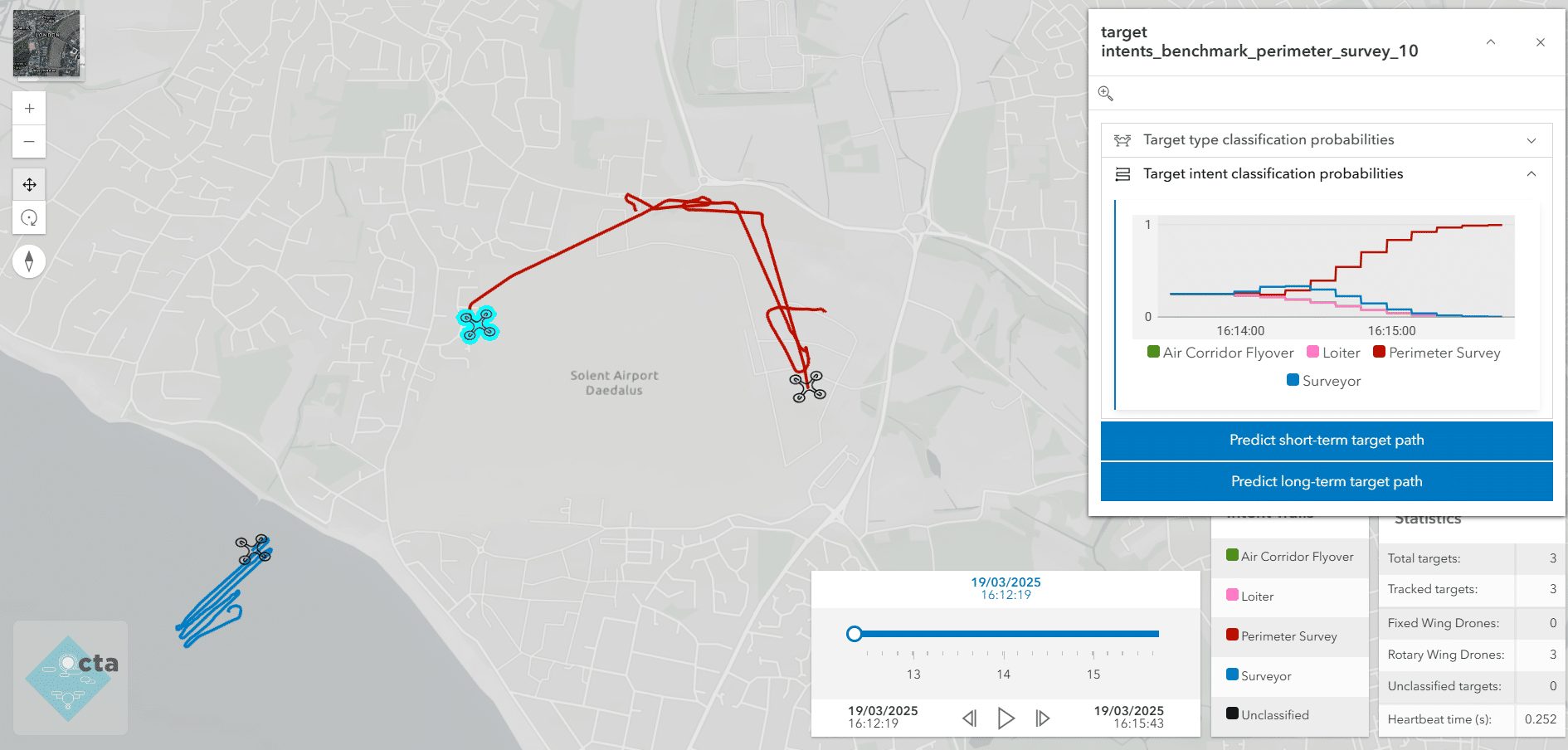
Assesses how an object is behaving and flags the flights that deviate from normal patterns for attention. (this merges the current "behaviour/intent" items and adds the anomaly-detection point Murray asked for)
Long-range classification
Classifies out to a sensor's full detection range, well beyond close-range methods such as micro-Doppler.
Sensor-agnostic fusion
Adds value to any sensor that outputs target tracks, and can fuse predictions from other classifiers (RF, micro-Doppler, camera) into a single result.
Scales with the airspace
Handles large numbers of simultaneous tracks, from a single sensor up to a multi-sensor C2 architecture.
In the field
Heathrow is among the busiest airports in the world, and in that airspace every airborne object has to be accounted for. Increasingly, not all of them are aircraft. Under Project HADO® (part of Innovate UK's Future Flight Challenge, in a consortium led by OSL), Octa is being developed for deployment at Heathrow, where it is designed to do two jobs at once: detect, classify and analyse unauthorised UAS entering controlled airspace, and validate authorised drone operations, confirming that UAS carrying out planned activity are where they are supposed to be, doing what they are supposed to. That second half matters. As drone operations become routine around airports and critical infrastructure, the challenge is no longer simply keeping drones out. It is telling the difference between the ones that belong and the ones that don't, reliably, at range, in some of the most demanding airspace there is.
Standards & interoperability
Full-range classification — classifies at a sensor's full detection range, not just at close range
Sensor agnostic — works with any sensor capable of providing target tracks
SAPIENT-compliant — open standard for autonomous sensor systems
C2 integration — deploys from a single sensor to large multi-sensor architectures within command and control systems
Other products
CBRN-Analysis NG
An advanced CBRN Knowledge Management Application
SCIM®
Plug-and-play sensor integration
UrbanAware
CBRNe situational awareness